 Review Articles
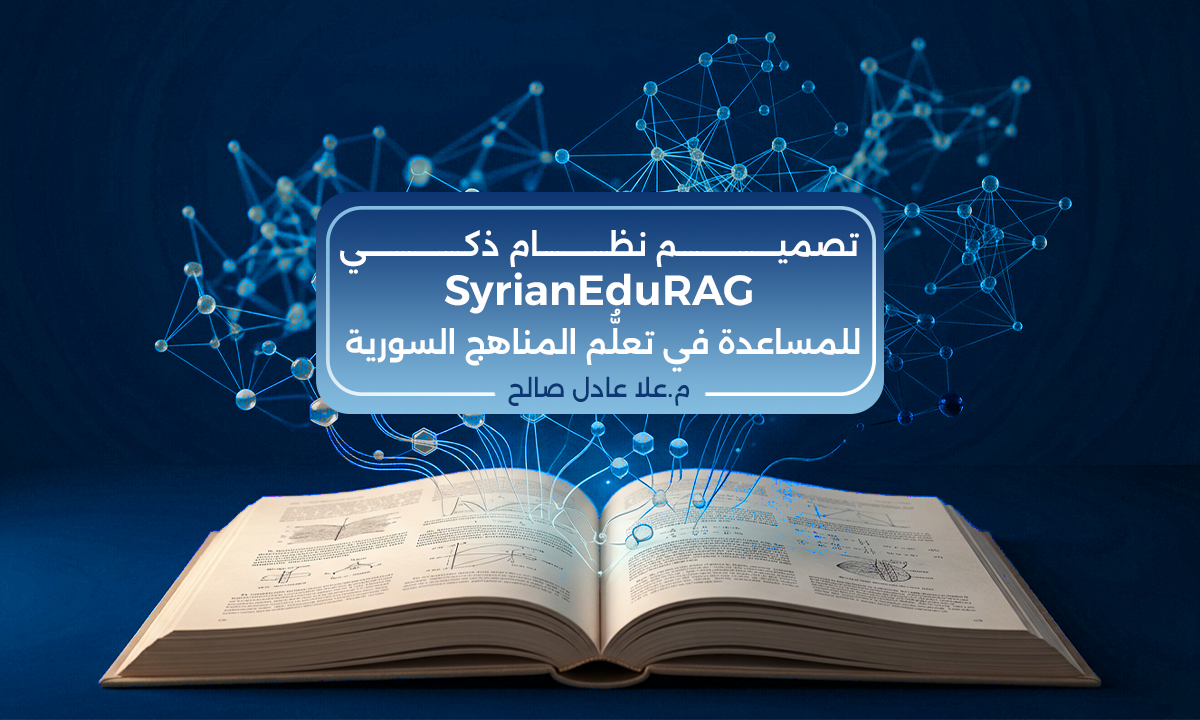
Eng. Ola Adel Saleh
Syrian educational environments face several challenges in keeping pace with digital transformation and employing artificial intelligence to serve school curricula. These technologies can be significantly leveraged to empower students in general—and those returning from Western countries in particular—helping them understand Syrian curricula and easily integrate into the national educational system.
This study aims to design and implement a Retrieval-Augmented Generation (RAG) system based on pre-analysis to improve interaction with Syrian curricula by developing a smart educational platform trained on textbook content and enabling multi-lingual interaction with it.
The system relies on converting educational texts into numerical representations stored in semantic indices, allowing the retrieval of passages relevant to the query and generating appropriate answers in Arabic. Experiments showed a significant decrease in response time and memory consumption, along with good accuracy in answers, making this model a practical step toward effectively and feasibly integrating artificial intelligence into Syrian education.
 Review Articles
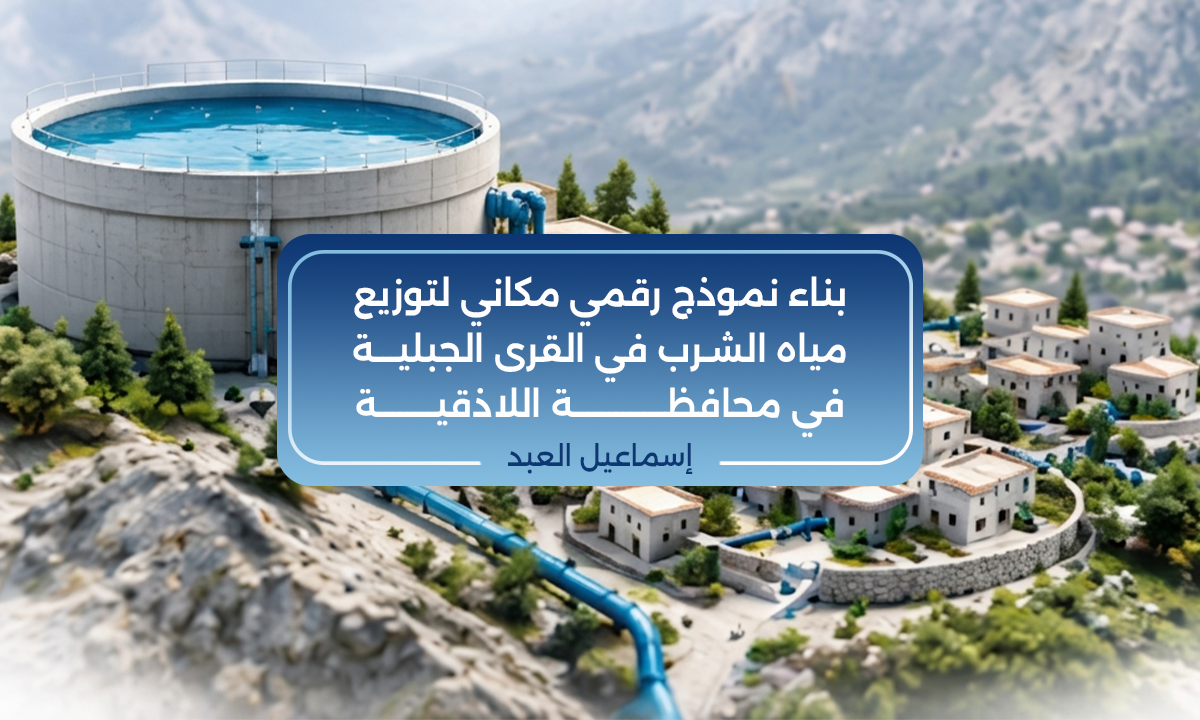
Ismail Al-Abed
The process of planning the infrastructure necessary for drinking water distribution in mountainous villages is one of the complex challenges facing decision-makers. This problem is evident in Syria in general and Latakia Governorate in particular, manifested by the spread of 'thirsty mountainous villages' that lack drinking water services. Since numerous criteria contribute to drinking water planning, alongside a clear divergence in the opinions of service-providing experts in this field, this research aims to develop a spatial digital model for drinking water distribution in mountainous villages. This model integrates the Partitioning Around Medoids (PAM) method with GIS functions to generate several analytical maps reflecting the proposed criteria in the target area.
The study resulted in the production of a combined surface map of potential intervention areas, which helps identify priority areas for intervention to provide drinking water networks in the studied region. This makes adopting such a model an essential phase when planning the necessary infrastructure for drinking water distribution in accordance with true stakeholders.
 Review Articles
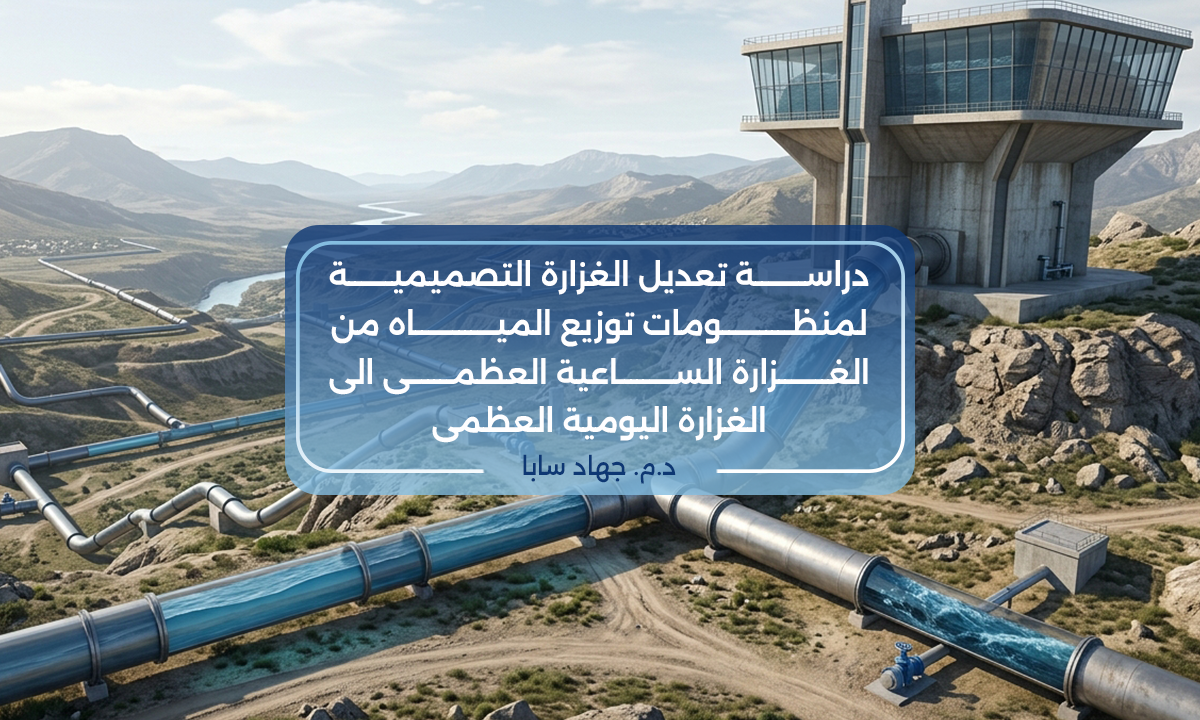
Dr. Eng. Jihad Saba
The design and analysis of drinking water distribution systems rely on several design parameters, including design discharge, which codes and references adopt as the maximum hourly discharge in the target year. However, following the performance of many drinking water distribution systems in Syria—especially daily and hourly discharges and consumption patterns—it has become evident that there is no single maximum consumption hour. Instead, peak consumption extends over a period of several hours with values lower than the maximum hourly consumption in the target year upon which systems are designed. That is, consumption values, patterns, and charts change as dictated by water scarcity conditions.
Technically and economically, network design heavily relies on the designer's experience in making an accurate and realistic selection of the design discharge for the entire system, as well as accurately predicting loads or withdrawals at system nodes. To achieve an acceptable estimation of design discharge and withdrawal quantities, studies on continuous water distribution systems have relied on the geometric method for population forecasting, rather than adopting a method suitable for the reality and nature of population growth in the study area. Under water scarcity conditions, studies on intermittent water distribution systems rely on field measurements and computer models that differ from continuous flow models due to the multiplicity and overlap of influencing factors.
Selecting the design discharge under water scarcity conditions fundamentally depends on the designer's experience, particularly under intermittent supply conditions. Therefore, work is underway to develop mathematical tools and simulation models to estimate future withdrawals, helping designers accurately predict water needs and design discharge. These models are built—after identifying the influencing factors and determining the contribution of each factor—using various techniques, including Regression and Artificial Intelligence (AI).
Determining node withdrawals under intermittent supply conditions—which is prevalent in Syria—with varying pressure conditions and the presence of building tanks and pumps, holds special importance in the study of drinking water systems under intermittent supply. The research concluded that for a better technical and economic design, it is preferable to select either the maximum daily discharge or the average daily discharge during peak summer months as the design discharge. It is also preferable to design drinking water networks in phases, with necessary calibration, making the design realistic and technically and economically viable.
 Review Articles
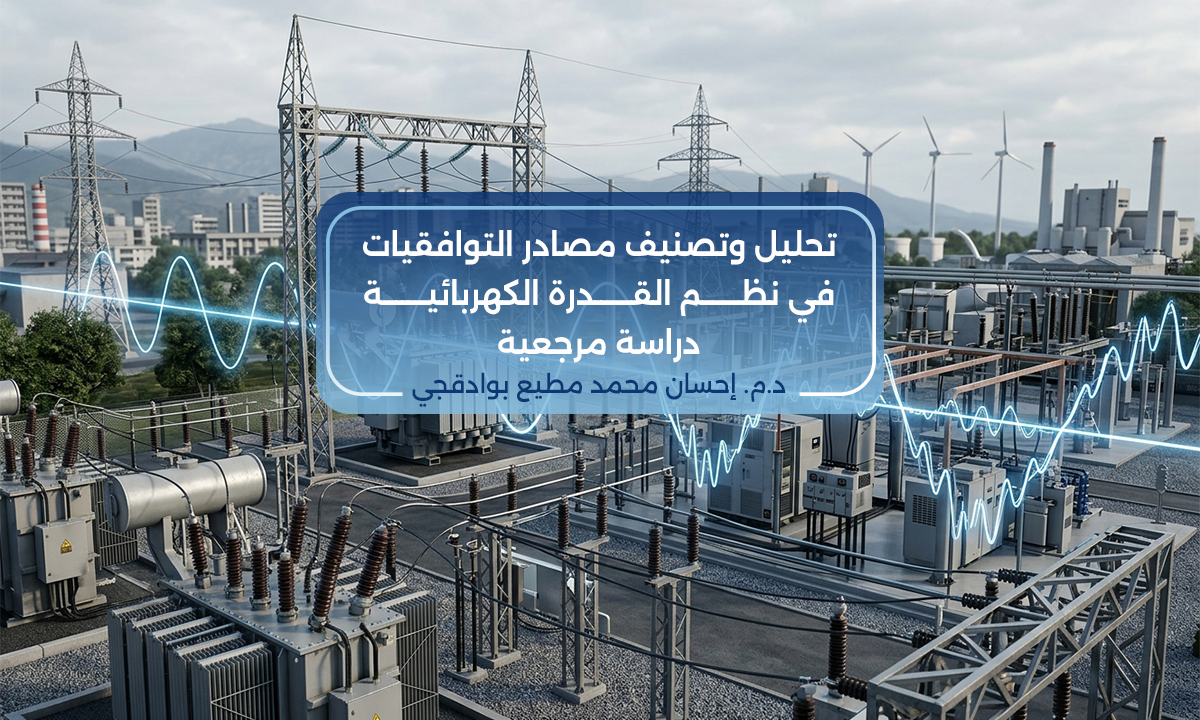
Dr. Eng. Ihsan Mohammad Motee Bwadekji
The primary cause of harmonic problems in electrical power systems is the massive increase in non-linear loads resulting from technological advancement, such as the use of power electronic circuits and equipment, particularly in AC-to-DC conversion and interfacing stages, or in loads powered by energy systems and utilizing electronic components or microprocessor-supported controllers. These devices generate harmonics due to the loads passing through power systems.
Before the advent of power semiconductors, the main sources of waveform distortion were the presence of electric arc furnaces, the cumulative effect of fluorescent lamps, and the limited deployment of transformers and electrical machines.
In general, harmonics are emitted by the following equipment:
* Converters
* Devices which include semi-conductor elements
* Generators
* Motors
* Transformers
* Lighting equipment working by gas discharge principle
* Photovoltaic systems
* Computers
* Electronic ballasts
* Uninterruptible power supplies (UPS)
* Switching power supplies
* Welding machines
* Control circuits
* Frequency converters
* Static VAR compensators
* Dynamic VAR compensators
* Arc furnaces
* HVDC transmission systems
* Electrical communication systems